The Secret Life of Cylinders: Why AA Batteries Are More Than Just a Commodity
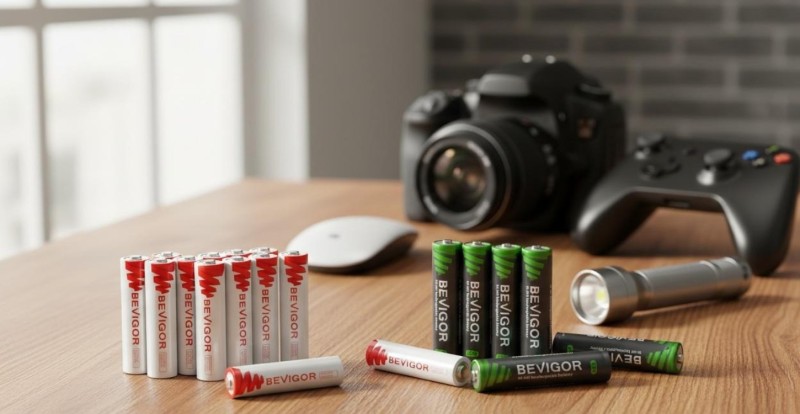
We usually don't think about AA batteries until the TV remote stops responding or a child's toy begins to make a dying, mechanical groan. In those moments, we often reach for the cheapest pack at the grocery store, treating these silver-and-gold cylinders like a simple commodity—similar to paper towels or salt.
However, viewing AA batteries this way ignores the sophisticated chemical engineering packed into that tiny space. A battery is not just a container of "juice"; it is a self-contained power plant. Much like how hearing aid batteries utilize zinc-air technology to pull oxygen from the atmosphere to maximize space for zinc "fuel," a standard AA cell must balance internal chemistry to provide a steady flow of energy. For a modern digital camera or a high-end gaming controller, this efficiency isn't just a bonus—it is a requirement for the device to function at all.
The Hidden Power Plant Inside Modern AA Batteries
To understand why some AA batteries fail while others thrive, we have to look at what is happening under the metal skin. Most of the batteries we buy are alkaline. These use a chemical reaction between zinc and manganese dioxide to create a flow of electrons.
Why Chemistry Matters for AA Batteries
Inside an alkaline cell, the energy is generated by a one-way chemical street. Once the chemicals have reacted, the "fuel" is spent. However, the design is ingenious: manufacturers have spent decades refining how much active material they can cram into that 50mm-long tube.
In contrast, lithium AA batteries use a completely different internal structure. Instead of a thick paste, they often use a "jelly-roll" design, where thin layers of lithium and other reactants are rolled up like a sleeping bag. This massive increase in surface area allows the battery to dump energy much faster than a standard alkaline. This is why a lithium AA battery long lasting enough for a high-drain flash unit, might be overkill for a simple wall clock, but essential for a photographer who can’t wait five seconds for their equipment to recycle.
Community Wisdom: Reddit and Quora on AA Batteries
If you want the unvarnished truth about which AA batteries actually survive the "real world," you have to go where the enthusiasts live. On forums like Reddit’s r/flashlight and Quora’s electronics threads, the "commodity" view of batteries is dead and buried.
User Secrets for Picking the Right AA Batteries
One of the most famous discussions on Reddit involves the "leaking" problem. A user on r/BuyItForLife, u/VoltageViking, shared a cautionary tale that many of us can relate to:
"I left a set of cheap, store-brand alkaline AA batteries in a $200 graphing calculator over the summer. When I opened it in the fall, the batteries had literally vomited potassium hydroxide everywhere. It ate through the motherboard. Now, I only use lithium AAs for anything expensive that might sit for a while. They don't leak, and they handle the heat of a backpack much better."
On Quora, a long-term camper noted that for emergency kits, the shelf life of AA batteries is the only metric that matters. They pointed out that while standard alkaline cells might lose 5–10% of their charge every year just sitting there, high-end lithium AA batteries can sit in a drawer for 20 years and still be at 90% power. In a survival situation, that's not just a convenience; it's a lifeline.
Getting More Life Out of Your AA Batteries
Most of us waste the potential of our AA batteries by using the wrong "fuel" for the job. You wouldn't put racing fuel in a lawnmower, and you shouldn't put a high-performance lithium cell in a TV remote.
Finding an AA Battery Long Lasting and Reliable
The key to finding an AA battery long lasting enough for your specific needs is matching the "drain" of the device to the chemistry of the cell.
- Low-Drain Devices (Clocks, Remotes): Standard alkaline AA batteries are perfectly fine here. Since the device only "sips" power, the internal reactants can keep up easily.
- High-Drain Devices (Game Controllers, Toys): This is where you want Nickel-Metal Hydride (NiMH) rechargeable AA batteries. They can be recharged hundreds of times, and they don't mind the "heavy lifting" of vibrating motors or wireless signals.
- Extreme Environment/Critical Devices (Smoke Detectors, Outdoor Sensors): Lithium AA batteries are the gold standard here. They perform in sub-zero temperatures where alkaline cells simply freeze and stop working.
The True Value of the Right AA Batteries
When we stop looking at AA batteries as a cheap commodity and start seeing them as the precision tools they are, our relationship with our tech changes. We stop worrying about whether the flashlight will work during a power outage or if the baby monitor will die in the middle of the night.
Just as the zinc-air technology in medical devices is a specialized solution for a high-stakes problem, the choice of which AA batteries to put in your gear is a choice about reliability. By investing a few extra dollars in a set of lithium or high-quality rechargeable cells, you aren't just buying power; you are buying the certainty that your devices will be ready when you are.
In a world that is increasingly portable and wireless, the humble AA batteries in your drawer are the silent partners in your daily life. Treating them with a bit of respect—and choosing the right chemistry for the right job—is the smartest way to keep your world running.
Are you currently using rechargeables for your high-use gear, or do you still find yourself reaching for a pack of disposables when the lights go out?